
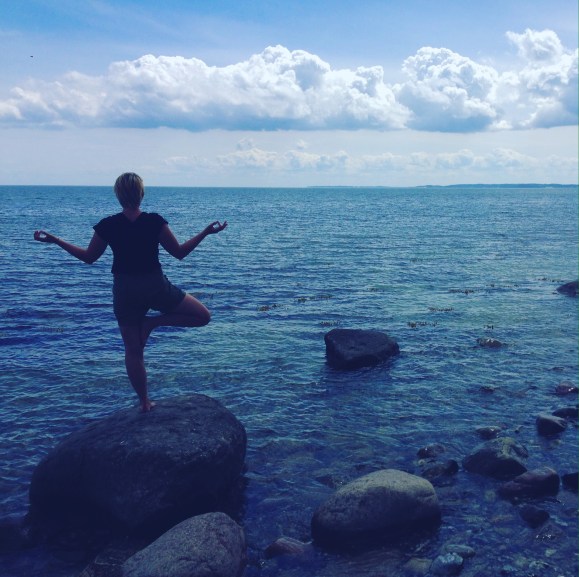
In June I kept rereading this passage by Henri Nouwen:
“You are beginning to realize that your body is given to you to affirm your self. Many spiritual writers speak about the body as if it cannot be trusted. This might be true if your body has not come home. But once you have brought your body home, once it is an integral part of your self, you can trust it and listen to its language.
When you find yourself curious about the lives of people you are with or filled with desires to possess them in one way or another, your body has not yet fully come home. As soon as you have come to live in your body as a true expression of who you are, your curiosity will vanish, and you will be present to others free from needs to know, or own.
A new spirituality is being born in you. Not body denying or body indulging but truly incarnational. You have to trust that this spirituality can find shape within you, and that it can find articulation through you.”
– Henri Nouwen, the Inner Voice of Love
I first became interested in yoga as an act of learning to trust my body completely, learning what it meant to fully embody it, learning not to be afraid to take a deep breath into my stomach, learning not to be afraid to eat. That might sound strange–learning to fully embody our bodies–but how often do we go through our day with no awareness that we even have toes? Doing yoga makes me aware of my toes. And being aware enough to notice that I have ten toes also helps me be aware of how to listen to my body, how to sit through all sorts of feelings, how to find a smidgen more space to move when it feels there is simply no more space. In my interpretation, this is what Nouwen means when he writes about bringing our bodies home–the idea of letting a new spirituality being born in us through our connection to our bodies and that this is an incarnational act (divine meeting body). Everyone connects to the divine in different ways; for me, it’s through yoga.
This week I finished 30 days of yoga (with Yoga with Adriene, fyi)! It’s actually been more like 45 days–because of all the days that I just laid in savasana the whole time–but who cares, that still counts. It’s the longest amount of time I’ve ever done yoga! I can almost get my feet flat on the ground in down dog (!!), and down dog is even starting to feel like a “resting” pose rather than a “I’M DYING AND I CAN’T BREATHE” pose.
It may come as a surprise, but even though I’ve been interested in yoga for several years, I’ve only half-halfheartedly dabbled in it. I went to studio classes occasionally, but those get expensive, so I never kept it up. So earlier this summer I had this idea that committing to at least 30 days of yoga would be a great gift to myself.
(Hah.)
It was a great idea, but to be honest, the first weeks sucked. It wasn’t an immediate “oh this is amazing, I’m SO GLAD I’m doing this!!! Yoga rocks!!” Please. I practically cried for the first week and had to drag myself, insides kicking and screaming, to just sit in child’s pose for a minute. Even then, I just sat there, feeling defeated and asking myself “Why am I doing this? I don’t want to be here.” It might sound ridiculous, but I have largely shown up to practice yoga with a profound sense of hopelessness about life and current events.
And so it went. I don’t want to be here but here I am. I don’t want to be here but here I am.
About halfway through the yoga challenge and endlessly asking, “Why am I here? Why am I doing this? What kind of change do I imagine can or will happen?” my body whispered to me the answer to the question I had been asking. Keep showing up–tears or no tears, heaviness or ease–and set an intention for my practice: hope. Hope for something being born out of it, being incarnated, a new spirituality, a new home in my body. But it wasn’t even hope exactly — is there a word for hoping for hope? Like “pre-hope”? That’s all I could manage: a very small thought that maybe if I showed up, I would find space for hope.
With each breath, each new centimeter of space created, I felt just a bit more at home, a bit more grounded. With each breath, a tiny bit more space for hope. With ever reach, with every inhale, an inhale for hope, a movement for hope. Sometimes hope has just been taking another breath, and another, and another.
And so it has gone.
Finding space for hope hasn’t been easy for me. It’s easy to look at all that’s wrong in the world and wonder what one can do and feel that yoga is perhaps nothing more than a series of movements that feel nice and release endorphins but do nothing more. Is it a worthwhile endeavor? Does it make a difference?
I don’t know exactly, and I don’t believe yoga is for everyone or that it’s a magical cure for the world. At this point I don’t even know very much about the history or philosophy of yoga and probably have a pretty Westernized conception of it.
But I don’t see yoga as some kind of escapism from the world, and I think it’s more than just doing stretches. If yoga makes me aware of my toes, it also makes me aware of my relation to other human beings–our interconnectedness, our divinity. It’s important to be engaged and aware, to know when to be still and when to move in all aspects of life, and for me, yoga plays a part in raising that awareness and consciousness. And because of that, I feel it’s impossible to write this post without mentioning Charlottesville, because I have been hyper-aware of what took place, feeling so many feelings of anger and disgust and sadness. I am shaken by the hate spewed by the far right and the fact that some political leaders seem to have a difficult time unequivocally condemning it. I believe it’s wrong to just brush it aside with the thought that white supremacists “are a very small percentage of the U.S. population, so let’s not get too worked up about it.” It still happened and many are hurt, frightened, and affected by it. And softer versions of it seem to be creeping into our public consciousness. So I don’t have answers about what to do and I hardly have words except to say I’m breathing into that awareness, wondering how to listen better and educate myself more, how to take action, and how to stay engaged when it is no longer plastered on the front page news.
I’ve been thinking of this quote by Thomas Merton:
“You are not big enough to accuse the whole age effectively, but let us say you are in dissent. You are in no position to issue commands, but you can speak words of hope. Shall this be the substance of your message? Be human in this most inhuman of ages; guard the image of man for it is the image of God.” –Thomas Merton
What does it mean to be human in the most inhuman of ages? To guard the image of man for it is the image of God? For me, it seems to be learning that we don’t just have bodies, we have souls. And we don’t just have souls, we have bodies. And what can be more human and simultaneously divine than connecting the two? Maybe that’s a bit loosey-goosey, and I’m not writing this as a theologian or a philosopher, just as someone experiencing life and doing yoga and trying to listen to the language of her body.
As Nouwen says, trust that this spirituality can find shape and articulation within you. Trust that we can come home to our bodies, that they have a language we can listen to. Trust that there is guidance in our bodies from the divine. Yoga teaches me to stay engaged, to stay aware, to take another breath and find strength and space to do something more. It is a practice of learning how to be human, of guarding the image of man for it is the image of Divine Love.
 Sarah the Adventurer